Who I am now
Nobody tells you that 'after' can feel this quiet
Treatment had a schedule. The rest of my life didn't come with one.
9 min read
For eleven months, I knew exactly where I'd be every other Wednesday at 9:15 in the morning. I knew which parking spot was usually open, which nurse liked to talk about her garden, and which vending machine actually gave you change. My calendar was full of appointments, scans, bloodwork, and the kind of follow-up calls that make your stomach drop when the phone rings.
I hated almost all of it. But it gave my days a shape.
Then one day it stopped. Not completely, there are still check-ins and scans, but the weekly rhythm ended. People hugged me. Someone brought a cake. My mom cried in the kitchen. And then everyone went back to their lives, which is exactly what they should have done.
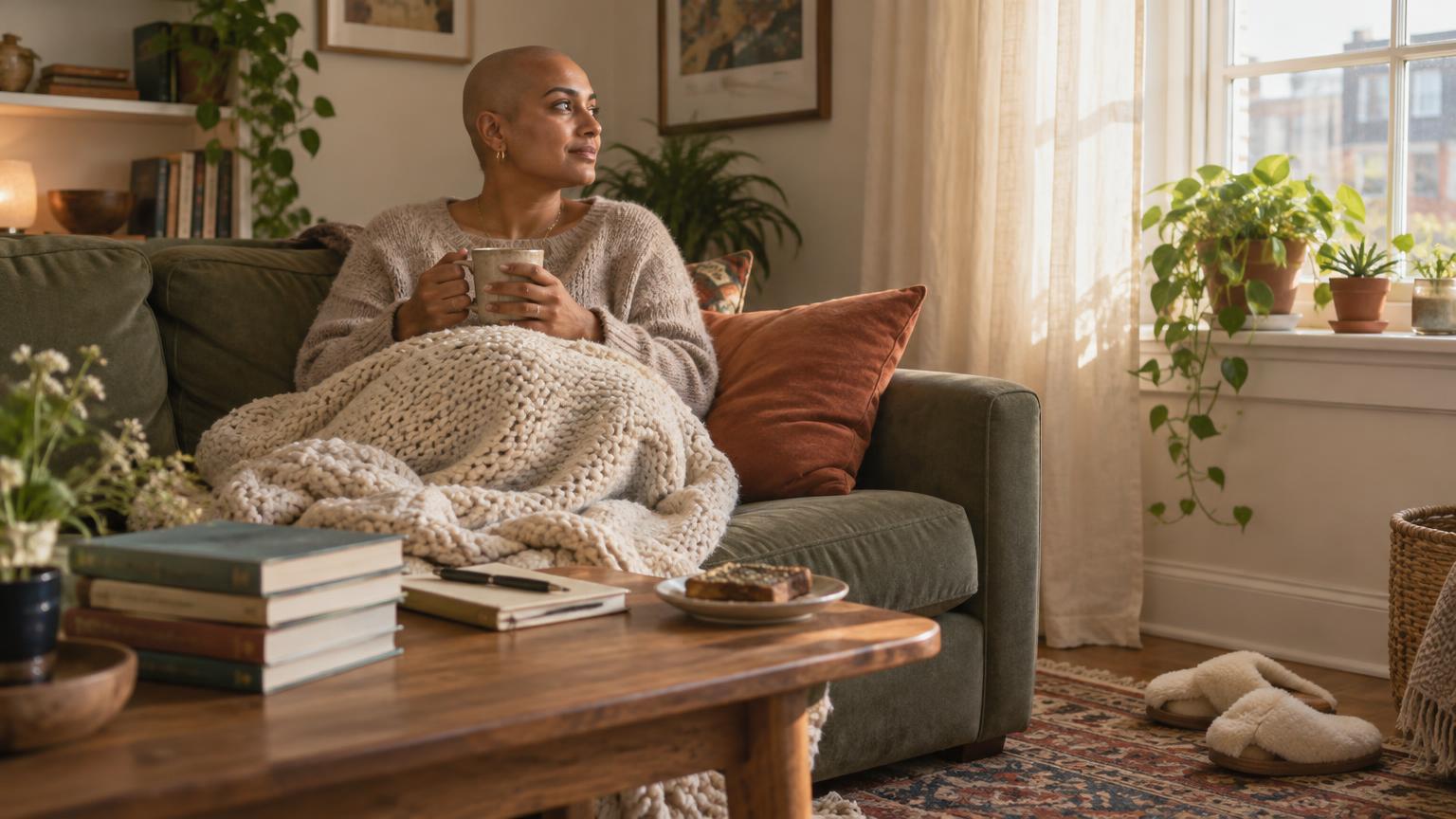
And I went home and sat on my couch and thought: now what?
The silence after the noise
I expected to feel relief. In some ways, I did. But mostly I felt strange. Like I'd been running hard for a long time and someone had suddenly told me to stop, and my legs didn't know what to do with themselves.
When you're in treatment, there's a clear task. Get through this. Show up. Take the medication. Rest when you can. It's awful, but it's simple in a way. There's a finish line, even if it moves.
After that, nobody hands you a new task. There's no schedule for figuring out who you are now. There's no nurse checking in to ask how your sense of purpose is doing. The world kind of assumes you'll just pick up where you left off.
But where I left off didn't exist anymore. The job I'd had was technically still there, but I wasn't the same person who'd been doing it. My friendships had shifted. My body had changed. My priorities were scrambled. I couldn't go back, and I didn't know how to go forward.
I kept waiting to feel like myself again. It took me a long time to realize that the old self wasn't coming back. A new one was arriving, slowly, and I hadn't met her yet.
The pressure to be okay
One of the hardest parts of the quiet was how loud everyone else's expectations felt. People would say things like, “You must be so relieved!” or “Now you can really live!” They meant well. But I didn't know how to tell them that I didn't feel relieved, exactly. I felt untethered.
There's this idea that once treatment ends, you're supposed to become some kind of brighter, wiser person. Someone who's grateful for every sunrise and never sweats the small stuff. I'm here to tell you that I still sweat the small stuff. I still get annoyed in traffic. I still lose my keys. I am not more enlightened than I was before. I'm just more tired, and a little more careful with my time.
I also felt guilty for not feeling better. I'd made it through. Other people I'd met during treatment hadn't been as lucky, or were still in the thick of it. Who was I to feel lost? Shouldn't I be grateful?
It took a therapist to point out that gratitude and grief aren't opposites. I could be glad treatment was over and also grieve the year I'd lost, the version of my life that had been interrupted, and the body I used to trust. Both were real.
What the quiet held
In those first few months, I did a lot of nothing. I watched an embarrassing amount of baking competition shows. I took long walks without any destination. I slept in. I didn't answer texts as quickly as I used to.
At first, I worried I was wasting time. Wasn't this supposed to be my second chance? Shouldn't I be booking trips and learning languages and writing a novel?
But slowly, in the quiet, I started to notice things. I noticed that I didn't miss certain people. I noticed that I really, really missed others. I noticed that I liked mornings now, which was new. I noticed that I didn't care about some of the goals that used to keep me up at night, and I cared a lot about things I'd never had time for, like cooking a real dinner or calling my grandmother on Sundays.
The quiet wasn't empty. It was just slow. And slow was something I'd never let myself be before.
Building a new kind of schedule
Eventually, I realized I needed some structure. Not the rigid, crowded kind I'd had before cancer, and not the medical kind I'd had during treatment. Something gentler.
I started small. A walk every morning, even if it was just around the block. One thing I was looking forward to each week, even if it was tiny, like a new library book or a coffee with a friend. A standing call with my sister on Thursday nights.
None of it was impressive. None of it would look good on a vision board. But it gave my days a little shape again, and it was a shape I'd chosen for myself.
I also started to let myself try things without needing them to mean anything. I took a pottery class and made a series of extremely lopsided bowls. I joined a book club and then quit it when it stopped being fun. I volunteered at an animal shelter for a few months. Some of those things stuck. Some didn't. That was fine. I wasn't looking for my purpose. I was just looking for what felt good.
Who I'm getting to know
It's been almost two years now. The quiet still comes back sometimes, usually around scan time, or on the anniversary of my diagnosis, or on random afternoons when I can't quite explain why I feel off.
But it doesn't scare me the way it used to. I've learned that the quiet isn't a sign that something is wrong. It's just space. Space for me to notice what I want, who I am, and what I need.
The woman I'm getting to know is slower than the old me. She says no more often. She's less interested in being impressive and more interested in being comfortable. She cries more easily, at commercials and in the produce aisle, and she's stopped apologizing for it. She's still figuring a lot of things out.
I don't think I'll ever be the person I was before. I've made a kind of peace with that. Not a perfect peace. Some days I miss her terribly. But I'm starting to like this new person too.
If you're in the quiet right now
If you're sitting on your own couch wondering what comes next, I want you to know that it's okay not to know. You don't have to have a plan. You don't have to be grateful on schedule. You don't have to make this time mean something big.
You can just be here for a while. Watch the baking shows. Take the walks. Let yourself be bored, and sad, and occasionally surprised by something you didn't know you'd enjoy.
The quiet won't last forever. But while it's here, it might have something to tell you. You don't have to rush to hear it.
This is a personal essay, not medical advice. If something here brings up a lot, be gentle with yourself.